Technical SEO
What Is Technical SEO? A Practical Definition for 2026

Ask five SEOs to define "technical SEO" and you’ll get five different answers - page speed, crawlability, schema markup, site architecture, Core Web Vitals, JavaScript rendering, security headers. All of them are correct. None of them, on their own, actually explain what technical SEO is for.
Here’s the practical version: technical SEO is everything that determines whether Google can find, understand, and trust your content enough to show it to someone searching. It has almost nothing to do with how good your content is. A brilliant, well-researched article that Google can’t crawl properly might as well not exist. Technical SEO is the plumbing - invisible when it works, and the only thing anyone notices when it doesn’t.
The Three Jobs of Technical SEO
Strip away the jargon and technical SEO does exactly three jobs. Everything that falls under "technical SEO" is really just a tool for one of these three things.
1) Can Google Find Your Pages? (Crawlability)
Google can’t index a page it never discovers. Crawlability covers everything that controls whether Googlebot can reach a page in the first place: your robots.txt file, your XML sitemap, your internal linking structure, and whether pages are orphaned (no other page on your site links to them).
A page can be perfectly written and still get zero traffic if it’s three clicks deep with no internal links pointing to it and it’s missing from your sitemap. Google simply never finds it.
2) Can Google Understand Your Pages? (Indexability & Rendering)
Finding a page isn’t the same as understanding it. This is where most 2026-specific technical SEO problems live, because so many websites are now built with JavaScript frameworks that load content after the initial page loads - React, Vue, Next.js, and similar. If your content only appears once JavaScript finishes running, and Google’s rendering process doesn’t wait long enough or hits an error, it sees a mostly blank page.
This also covers duplicate content, canonical tags (telling Google which version of a page is the "real" one), and structured data (schema markup) that helps Google understand what kind of content a page contains - a recipe, a product, a local business, an article.
3) Does Google Trust Your Pages Enough to Rank Them? (Site Health & Experience)
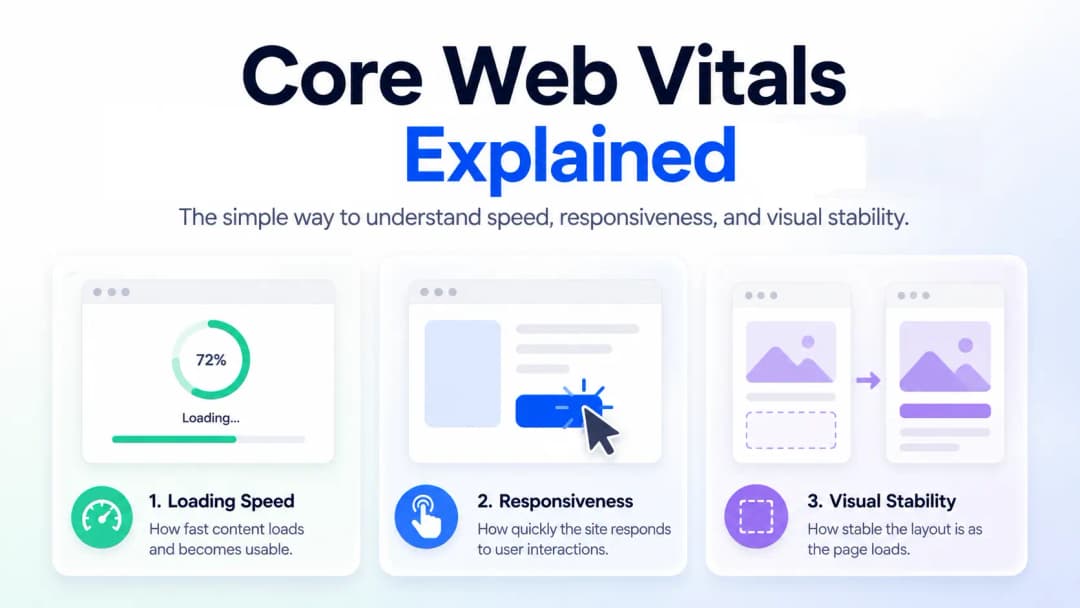
The third job is harder to pin down because it blends technical signals with user experience. Page speed (measured through Core Web Vitals), mobile usability, HTTPS security, and broken links all fall here. None of these guarantee a ranking boost on their own - but they remove friction that would otherwise push a visitor back to the search results, which is itself a signal Google pays attention to.
What Technical SEO Is Not
This matters as much as the definition itself, because technical SEO gets blamed for problems it doesn’t cause and credited for wins it didn’t create.
| What Technical SEO Is Not | Why That Matters |
|---|---|
| A replacement for good content | A technically flawless site with thin, generic content still won’t outrank a site with genuinely useful, well-targeted content on a mediocre technical foundation. Technical SEO removes obstacles - it doesn’t manufacture relevance. |
| "Everything with a number attached" | Keyword difficulty, search volume, and click-through rate are important, but they’re not technical SEO - they’re research and content strategy. A common mistake is treating any metric-heavy report as a "technical audit" when most of what’s being measured is actually content performance. |
| A one-time fix | Sites change constantly - new pages get added, developers push updates, plugins get installed. A technical SEO issue fixed in January can reappear in June because nobody checked whether a site update reintroduced it. Technical SEO is closer to maintenance than a project with a finish line. |
Why "2026-Specific" Matters Here
Technical SEO in 2026 looks meaningfully different from technical SEO five years ago, for two reasons worth naming directly:
AI-powered search now reads your site differently than a person does. Google’s AI Overviews, along with tools like ChatGPT search and Perplexity, pull passages out of your content to answer questions directly - sometimes without a click at all. If your content is only accessible after JavaScript renders, or your structured data doesn’t clearly label what a page is about, these AI systems have the same problem traditional Google crawling does: they can’t extract what they can’t reliably see.
Site builders and no-code platforms have gotten good enough that a lot of technical debt is now invisible to the person managing the site. A business owner using a modern website builder can publish a page that looks fine, loads slowly, and hides half its content behind client-side JavaScript - without ever knowing any of that happened. Technical SEO increasingly means catching problems the platform introduced silently, not problems a developer wrote on purpose.
A Practical Checklist: The Technical SEO Basics That Actually Move the Needle
Not every technical SEO factor deserves equal attention. These are the ones worth checking first, in rough order of impact:
- Is the page actually indexed? Search
site:yourdomain.com/specific-page-urlin Google. If it doesn’t show up, nothing else on this list matters yet. - Does the content appear without JavaScript? Right-click the page, "View Page Source," and check whether your main content is actually in the raw HTML - not just visible in the browser after scripts run.
- What’s the mobile load time? Run the page through PageSpeed Insights. Anything consistently over 3 seconds on mobile is worth investigating, especially on pages meant to convert.
- Is there a canonical tag, and does it point to the right URL? Especially important for e-commerce sites and any page with URL parameters (filters, tracking tags).
- Does the sitemap actually reflect the live site? An outdated sitemap listing removed pages, or missing new ones, quietly confuses how Google prioritizes crawling.
- Is structured data present and error-free? Use Google’s Rich Results Test. A schema error doesn’t just lose a rich snippet - increasingly, it affects whether AI search tools can confidently pull from the page at all.
- Are there redirect chains? A page that redirects through two or three hops before landing on the final URL wastes crawl budget and slows the experience. One redirect, straight to the destination, is the goal.
"Before assuming a page needs a content rewrite or more backlinks, ask the more basic question first: can Google actually see, understand, and trust this page?"
Sachin Pokharel
The Honest Bottom Line
Technical SEO isn’t glamorous, and it rarely gets credit when it’s working - a well-optimized site’s technical foundation is invisible by design. But it’s also the single most common reason genuinely good content underperforms. Before assuming a page needs a content rewrite or more backlinks, it’s worth asking the more basic question first: can Google actually see, understand, and trust this page in the first place? More often than expected, that’s where the real problem was hiding.
Tags: technical SEO, crawlability, indexing, Core Web Vitals, AI search
Frequently Asked Questions
What is technical SEO in simple terms?
Technical SEO is everything that determines whether a search engine can find, understand, and trust your pages. It covers crawlability, indexing and rendering, and site health signals like speed, mobile usability, and HTTPS - not the quality of the content itself.
Is technical SEO more important than content?
Neither replaces the other. Technical SEO removes the obstacles that stop good content from ranking, but it cannot manufacture relevance. A technically perfect site with thin content still loses to useful content on a decent technical foundation.
How often should technical SEO be checked?
Treat it as ongoing maintenance rather than a one-time project. Sites change constantly through new pages, plugin installs, and developer updates, so an issue fixed in January can reappear months later. A monthly or quarterly check plus a review after every major site update works well.
Does technical SEO affect AI search results?
Yes. AI Overviews, ChatGPT search, and Perplexity extract passages from your pages, so they hit the same barriers crawlers do. Content that only appears after JavaScript renders, or pages with broken structured data, are harder for AI systems to read and cite confidently.

Sachin Pokharel
SEO Expert
Sachin Pokharel is an SEO expert based in Kathmandu, Nepal, specializing in search engine optimization, keyword research, and digital marketing strategies. He helps businesses improve online visibility and organic traffic through data-driven SEO techniques.
More Insights